
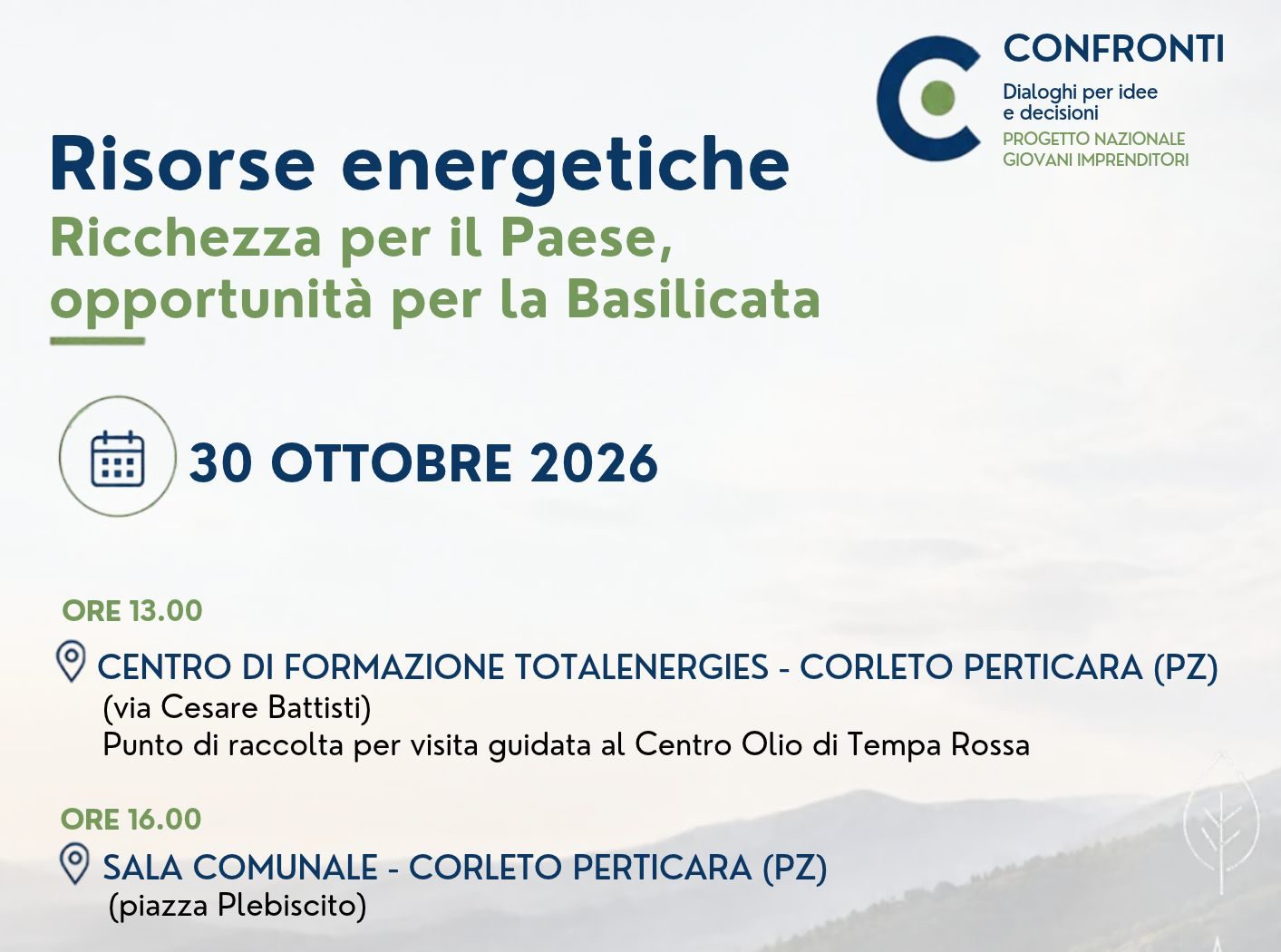

Venerdì 30 ottobre farà tappa in Basilicata il progetto nazionale dei Giovani Imprenditori di Confindustria “CONFRONTI”. Si tratta del format ideato per creare un dialogo diretto e strutturato tra il mondo delle imprese e le istituzioni, con l’obiettivo di tradurre le priorità delle nuove generazioni in misure concrete e trasversali.
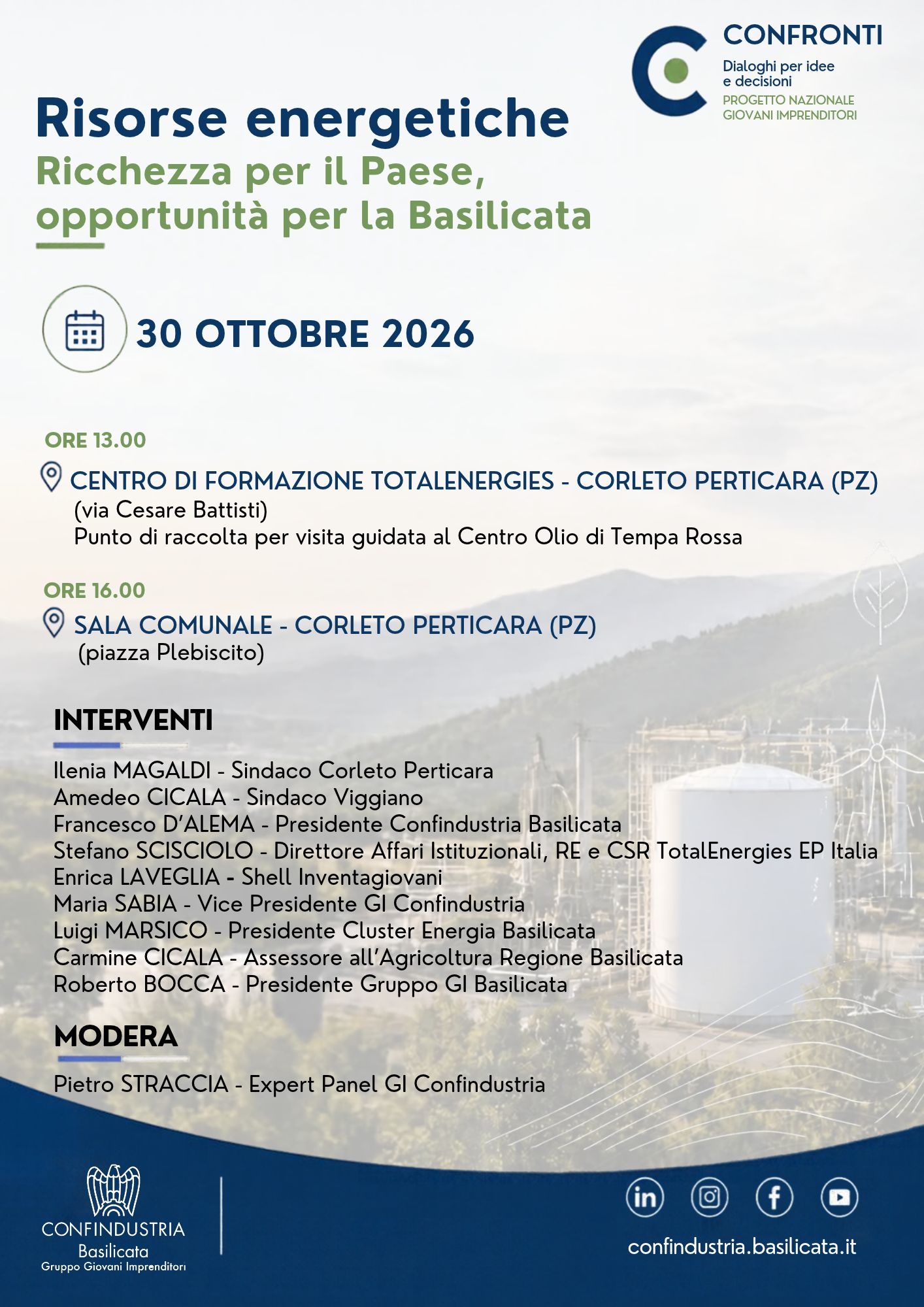
In particolare la tappa lucana è dedicata al tema “Risorse energetiche. Ricchezza per il Paese, opportunità per la Basilicata“. Dopo la visita aziendale di una delegazione di giovani imprenditori al Centro Olio Total di Tempa Rossa, alle ore 16, presso la sala comunale di Corleto Perticara si terrà il confronto con la partecipazione di:
lenia MAGALDI – Sindaco Corleto Perticara
Amedeo CICALA – Sindaco Viggiano
Francesco D’ALEMA – Presidente Confindustria Basilicata
Stefano SCISCIOLO – Direttore Affari Istituzionali, RE e CSR TotalEnergies EP Italia
Enrica LAVEGLIA – Shell Inventagiovani
Maria SABIA – Vice Presidente GI Confindustria
Luigi MARSICO – Presidente Cluster Energia Basilicata
Carmine CICALA – Assessore all’Agricoltura Regione Basilicata
Roberto BOCCA – Presidente Gruppo GI Basilica
Modererà i lavori Pietro STRACCIA, Expert Panel GI Confindustria.
Cordiali saluti.